
A clogged kitchen sink can quickly interrupt your day. Whether the water is draining slowly, backing up completely, or leaving unpleasant odours behind, the problem usually starts with what goes down the drain.
For homeowners, understanding the most common causes of kitchen sink clogs is the first step toward preventing them. Below, Roto-Rooter Plumbing & Drain Cleaning explains what commonly blocks kitchen drains, how these clogs form, and what you can do to keep water flowing properly.
Quick Answer: What Causes Kitchen Sink Drains to Clog?
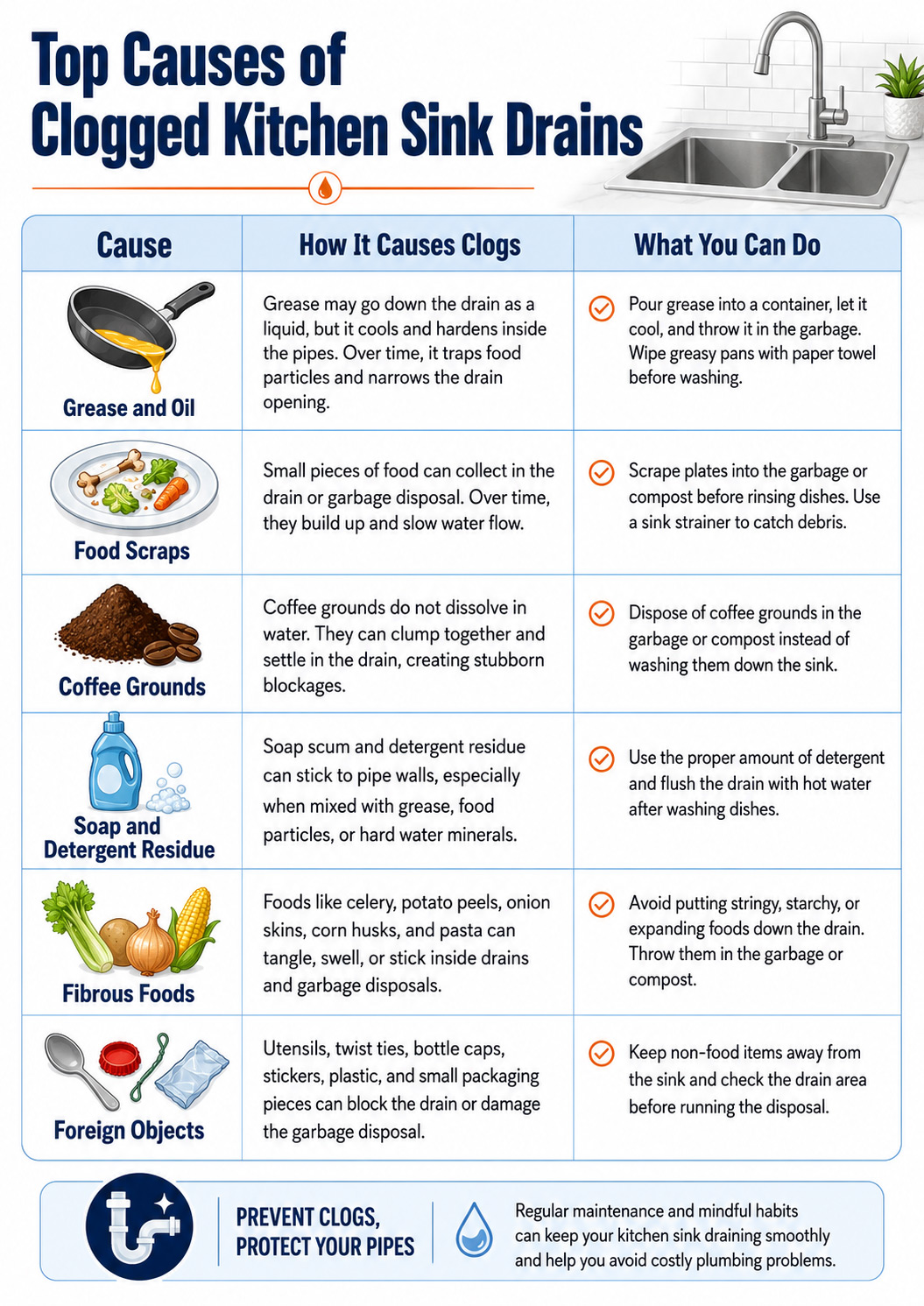
The most common causes of clogged kitchen sink drains are grease and oil buildup, food scraps, coffee grounds, soap residue, fibrous foods, and foreign objects. These materials can stick to pipe walls, collect in the drain trap, or combine with other debris until water can no longer flow freely.
Why Grease Is One of the Biggest Kitchen Drain Problems
Grease is one of the most common reasons kitchen sinks clog because it does not simply rinse away. Even if hot water helps grease move through the drain at first, it can cool farther down the pipe and begin sticking to the inside walls.
Once grease builds up, other debris catches on it more easily. Food scraps, soap residue, and coffee grounds can all stick to the greasy surface, creating a blockage that grows over time.
Best prevention tip: never pour cooking oil, bacon grease, butter, or fat down the kitchen sink.
Can Food Scraps Clog a Kitchen Sink?
Yes. Food scraps are another major cause of kitchen sink clogs. Even small food particles can become a problem when they collect in the drain trap or stick to existing buildup inside the pipe.
Garbage disposals can help break down some food waste, but they are not designed to handle everything. Too much food at once, fibrous scraps, or starchy foods can overwhelm the disposal and contribute to clogs.
Foods You Should Avoid Putting Down the Kitchen Drain
Some foods are more likely to cause drain problems than others. Avoid putting these items down your kitchen sink:
| Food Item | Why It Can Cause Problems |
|---|---|
| Coffee grounds | Clump together and settle inside pipes |
| Rice and pasta | Expand with water and become sticky |
| Potato peels | Create a thick, starchy buildup |
| Celery and corn husks | Fibres can tangle in the drain or disposal |
| Eggshells | Small pieces can mix with grease and debris |
| Grease, fats, and oils | Harden inside pipes and trap other material |
| Large food scraps | Can collect in the drain or jam the disposal |
Signs Your Kitchen Sink Drain Is Clogged
A kitchen sink clog does not always happen all at once. In many cases, there are warning signs before the sink stops draining completely.
Common signs include:
- Water draining slowly
- Gurgling sounds from the drain
- Bad odours coming from the sink
- Water backing up into the sink
- Food particles returning after draining
- Standing water around the drain
- Garbage disposal struggling or making unusual sounds
If these signs continue after basic cleaning, the blockage may be deeper in the drain line.
How to Prevent Kitchen Sink Clogs
Preventing clogs usually comes down to being careful about what goes down the drain and keeping up with regular maintenance.
1. Use a Sink Strainer
A sink strainer catches food scraps before they enter the drain. This is one of the simplest and most affordable ways to prevent kitchen sink clogs.
2. Keep Grease Out of the Drain
Pour grease into a disposable container, let it cool, and throw it away. For greasy pans, wipe them with paper towel before washing.
3. Run Hot Water After Washing Dishes
Hot water can help move light residue through the drain. This does not solve heavy buildup, but it can help reduce everyday residue.
4. Avoid Overloading the Garbage Disposal
Feed small amounts of food into the disposal at a time and run plenty of water while using it. Avoid fibrous, starchy, greasy, or expanding foods.
5. Schedule Professional Drain Cleaning
If your kitchen sink clogs often, there may be buildup deeper in the pipe. Professional drain cleaning can remove stubborn blockages and help prevent recurring issues.
What Should You Do If Your Kitchen Sink Is Already Clogged?
If your kitchen sink is clogged, stop using the sink until you know how serious the blockage is. Continuing to run water can cause backups or make the mess worse.
You can start by checking the sink strainer, clearing visible debris, and making sure the garbage disposal is not jammed. However, avoid forcing objects down the drain or relying too heavily on chemical drain cleaners. These products may not fully remove the clog and can sometimes be hard on your plumbing.
For slow, recurring, or completely blocked kitchen drains, it is best to call a professional plumber like Roto-Rooter Plumbing & Drain Cleaning.